Monday, May 20, 2013

NATURE: The Butterflies' Pavilion, Museum of Natural History, LA

Another of my beloved creatures: the butterfly, receives star treatment each year in many cities with a viewing tent. Our beautiful museum does one and it was a great pleasure to view them.  I felt as light as they as I circled the tent, watching them flutter about, oblivious to the delighted families.  


A monarch, the king of butterflies on the West Coast.  How sad it makes me to think of their decimated habitats and declining populations.

 In Pacific Grove their tree habitat was radically pruned, due to the city's concerns with liability due to falling tree limbs. 

 In Mexico, the over-wintering destination for these migrating butterflies, decline was 59%. This was due to loss of milkweed plants in the United States; farmers are planting more due to profitability factors, and planting genetically modified crops that are herbicide-resistant, killing milkweeds which grew between rows. Severe heat and weather were also a factor. 

Red Admiral, a common butterfly; the mature butterfly sips from buddleia.  It overwinters in southern Texas.


Spicebush swallowtails - what a beautiful, quite large (3 1/2 inches) butterfly - an edibe mimic of the poisonous pipevine swallowtail.

swallowtail larvae
Owl or tropical buckeye 


Zebra-wing (not my own photo, although the others are.) This butterfly never stopped fluttering, although all the others were sitting on the ground, rather fixed in position.
White peacock (?) 

Fritillary (?)

Queen Butterfly

Saturday, May 18, 2013

ENERGY/ENVIRONMENT: Game-Changer: Watch Out, Middle-Eastern Oil Suppliers

I'm thinking the US will be in a position to shift its energy dependency on the Middle East, with political and economic ramifications that will be far reaching.
Balancing that possibility, the ecological cost will be very great, because the shift depends on an infrastructure based on extensive use of fracking technology, long pipelines, and international shipping.   
"U.S. oil production is rising sharply and increased output from shale will be a "game changer" in global energy markets in the coming years, according to a new report out Tuesday by the International Energy Agency." (NPR)
At the same time, the transportation industry is turning to natural gas to power trains, buses, and trucks, increasing demand for LNG.
NYTimes, 5-16-2013
Look at this mess of waste oil production sludge.(a Koch Brothers-owned industry site). Surely the trade-offs that will remove our Achilles heel of energy dependence are going to be a Faustian bargain as the earth is excavated to bone. It sickens me.  We can't go back. 
"U.S. shale oil will help meet most of the world's new oil needs in the next five years, even if demand rises from a pick-up in the global economy," the Paris-based agency said in its five-year outlook, called the Medium-Term Oil Market Report.
Alexis Smith, "Rule of Thumb", from Craig Krull Gallery
The artist has placed an old wooden school ruler across an old postcard like image of a dream mountain environment.  So simple, didactic in calling out the cost-benefit analysis regarding environmental issues. The loss grieves me daily and deeply.

 It works for me as I live depending on my relation with the natural world for meaning and transcendence:  how can I ever really do anything more than meditate upon the the magnitude and profundity of nature's processes? 
"North American supply is an even bigger deal than we thought. A real game changer in every way," said Maria van der Hoeven, the IEA's executive director.
She said that North American production has set off a "supply shock that is sending ripples throughout the world" and urged the United States to dismantle the Export Administration Act of 1979, which bans the sale of U.S. crude abroad, except to Canada and Mexico.
"This issue is on the table. I think it has to be addressed because if there are no export licenses for crude, then the industry will find different ways, as they are looking for now already with processed, half-processed products, things like that," van der Hoeven said.
Canada, one of the world's largest petroleum exporters, has also gotten oil from tar sands ....Fracking/tar sands production is responsible for the change in the energy industry.
Those combined factors have resulted in a "steeper than expected" rise in North American production....
On the demand side, Gjelten reports, it's no longer the big industrialized countries such as the United States that are also the biggest oil users. The IEA predicts countries such as China and India will need more oil than the industrialized counties at "some point" in the future.
"But it's happening. And it's happening fast. It's faster than expected," van der Hoeven says.
One big reason for rising supply is that energy consumers are expected to look more toward natural gas to fill their needs. Antoine Halff, head of the IEA's Oil Industry Division, says trucks and trains, for example, will turn away from oil.
"In fact, we're now expecting that we're going to see some transition of transport demand from oil to natural gas before the end of the forecast period," Halff says.  (NPR)
The market shifts:
Cheniere Energy has an export license for liquified natural gas and is converting a gas terminal in Sabine Pass, LA to do so"... the expansion which will enable the facility to export U.S. natural gas worldwide. It will include two enormous refrigeration units used to cool the methane gas coming in to the terminal from pipelines across the country." (NPR, 5-17-2013)

BOOK: Steve Jobs by Walter Isaacson


Quite fascinating, An in-depth biography which balanced Job's unique character, personality difficulties and quirks, his brilliant uncompromising artistic genius, and his barracuda business acumen. 

I'm an Apple user, always have been. Jobs great insight was that the computer was a tool of personal liberation, and it has been for me. Ironic that the tool of liberation has a premium price tag.

He and his life are a struggle between his 60's Liberation values and his deeply competitive capitalist methods.

Like Picasso, he didn't try to justify, he was not warped by consumer culture, conventional wisdom, and pressures to conform to social norms. He had the ability to stand against norms and create something new and world-changing.  An amazing individual.

Less material about his personal life than I would have liked. Curious about the intricacies of his relationship with his wife. He must have been an extremely difficult husband, in my opinion.

The book has a few repetitive spots. It narrates fairly and in detail each of Steve Job's major business innovations, and the difficulties he had bringing them to market. Lively business school case study material, but left me awed by his fierce and risky choices.

His work while he was ill is poignant. We do not hear about the bitter end; I would have liked the closure of that narrative.

Wednesday, May 15, 2013

TRAVEL: The East Coast Spring and a Family Story

 Elizabeth Pinneo was a tall elegant beauty of 22 when she married Dayton Ogden in 1942. A teacher at a Manhattan private school, she and Dayton, a strikingly handsome naval lieutenant commander,  fell in love and like so many lovers trapped by war, married soon, wrote letters, and waited for an end to the unimaginable events     
they lived through. Dayton, their first son, was born in 1945, and John Cabot, the second, destined to become my husband, was born in 1946. 

In 1949, so many former GIs like my own parents and the Ogdens, bought homes.

They found a beautiful growing town,   

Bridle  Path
New Canaan, Connecticut, far out from Manhattan but a town that looked like and would be, an American dream.  The children of war's postponed fulfillment were born and families raised during those years, in Better Homes and Gardens houses that sheltered the offspring of The Greatest Generation. This is the house they lived in,on Bridle Path, where all 4 of their children grew up and went out into the much-changed world.


 John, that second child, became my mid-life "trophy" husband. Our marriage is an engaged, rich, and unexpected blessing, built wisely upon our early life mistakes.  He is about age 2 1/2, in this photo, at the beach where the family went frequently, ocean-lovers all. He maintains the same slightly puzzled and amused expression to this day.

New Canaan Cemetery
I flew back to New Canaan, when Elizabeth, "Lib", to me, at age 94, had a serious fall and entered a care center. I had time with her every day,sitting easily and sometimes quietly; comfortable chats with Lib, and family that revealed her sense of humor and quantities of memories, and her pleasure in her visiting family.

One of the sweetest things about Lib is how much she loves flowers and the natural world. I do, too, and it was an unexpected gift to me to see an East Coast springtime for the first time, in its almost shocking fullness. 
The care center's attentive and kind routines,and visits from her loving family stabilized Lib, and she got a little better each day. The other marvel, unfolding each day, was the cultivated glory of the gardens of the town.     

Rhododendron


Spirea
John and his brothers and sisters have deep roots here. Houses around the town center are small charming Queen Annes and Victorians, in the wooded areas grassy swaths on which mini-estates rest, and an occasional Philip Johnson modern is visible through the trees.
We had several warm sunny days, each with a freshness to delight us. We sat out with Lib watching the fountain, birds, and a deer which nibbled at willow crudités across the stream.
We used to call this bleeding heart in the Midwest
Bluebells?
I don't remember the Midwestern springs of my childhood well, except for the delight of bird-watching and going barefoot at last.  


I don't think I wore shoes much in summer at all. So I'm substituting the memory of the yard gardens of New Canaan to be the iconic image of springtime to hold in mind from now on.


I feel like a prequel has been added to my life image bank.


Forsythia

The names of these flowers and trees, however, are familiar to me from the poetry I have read
celebrating the return of springtime:
   
Robert Frost, Emily Dickinson, Edward Arlington Robinson come to mind.


Dogwood - this is the most elegant tree of Springtime, graceful branches dense with flowers, lacy and open, spreading and so like a Japanese scroll painting.
In Japanese art, a Zen Buddhist aesthetic called "mono no aware" values the transient nature of beauty, the possibility of spiritual transcendence, and the unknowable nature of existence. It translates literally as "an awareness of things".

Another related term, "wabi-sabi", describes finding meaning in profound nature, and accepting the natural changes and cycles of all existence. What is authentic and perhaps imperfect is most revered, and this is beauty, fleeting and returning.


white dogwood 
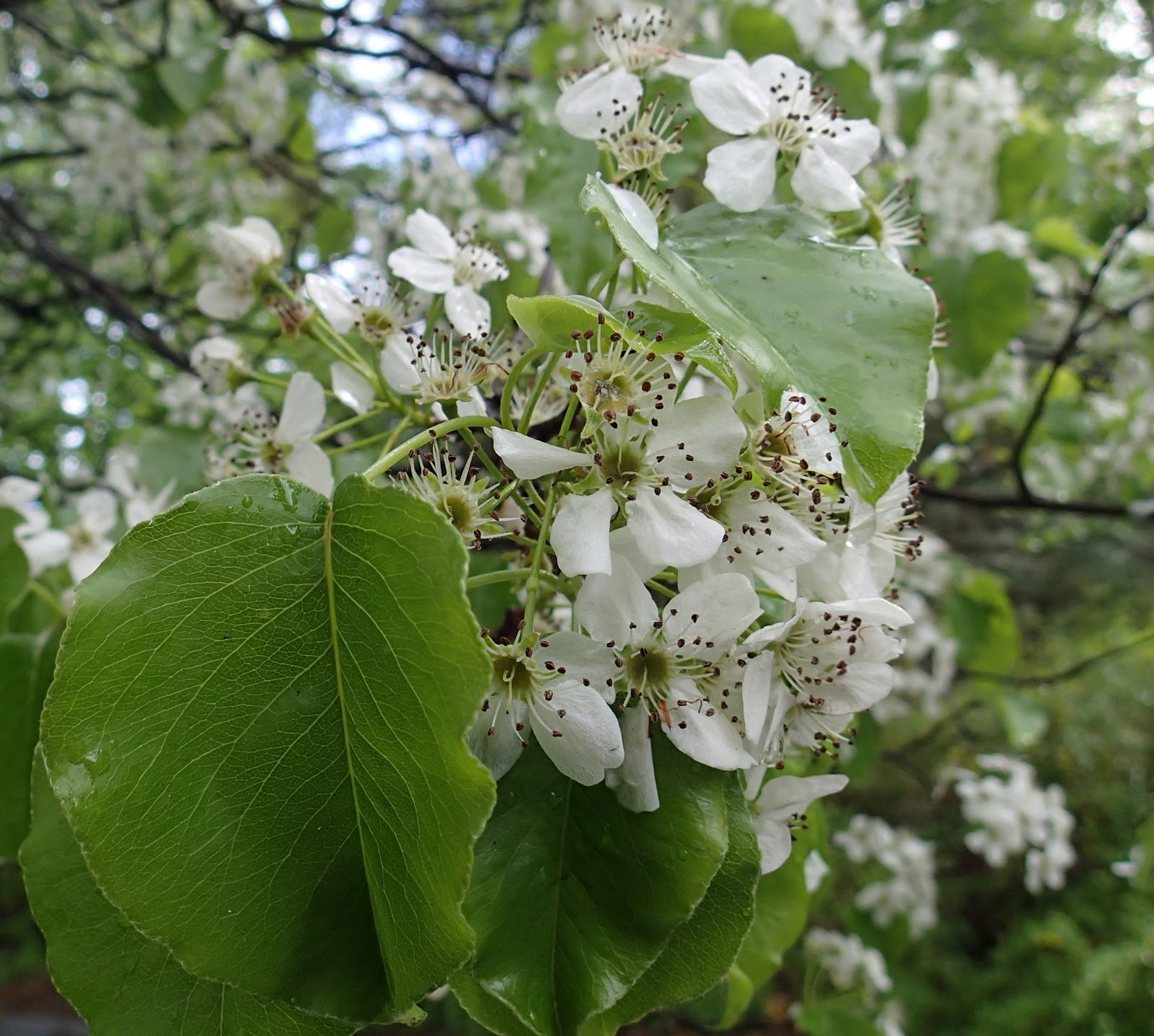
fruit tree?
Beneath the cherry tree

One sunny spring morning
     
I lift my face
 to

Pink rain falling.


These ragged and ruffled tulips reminded me of the sleeves of a woman's dress in a John Singer Sargent portrait.

Fully open, the classic tulip form seems to have been exploded by  its willful opening energy.  


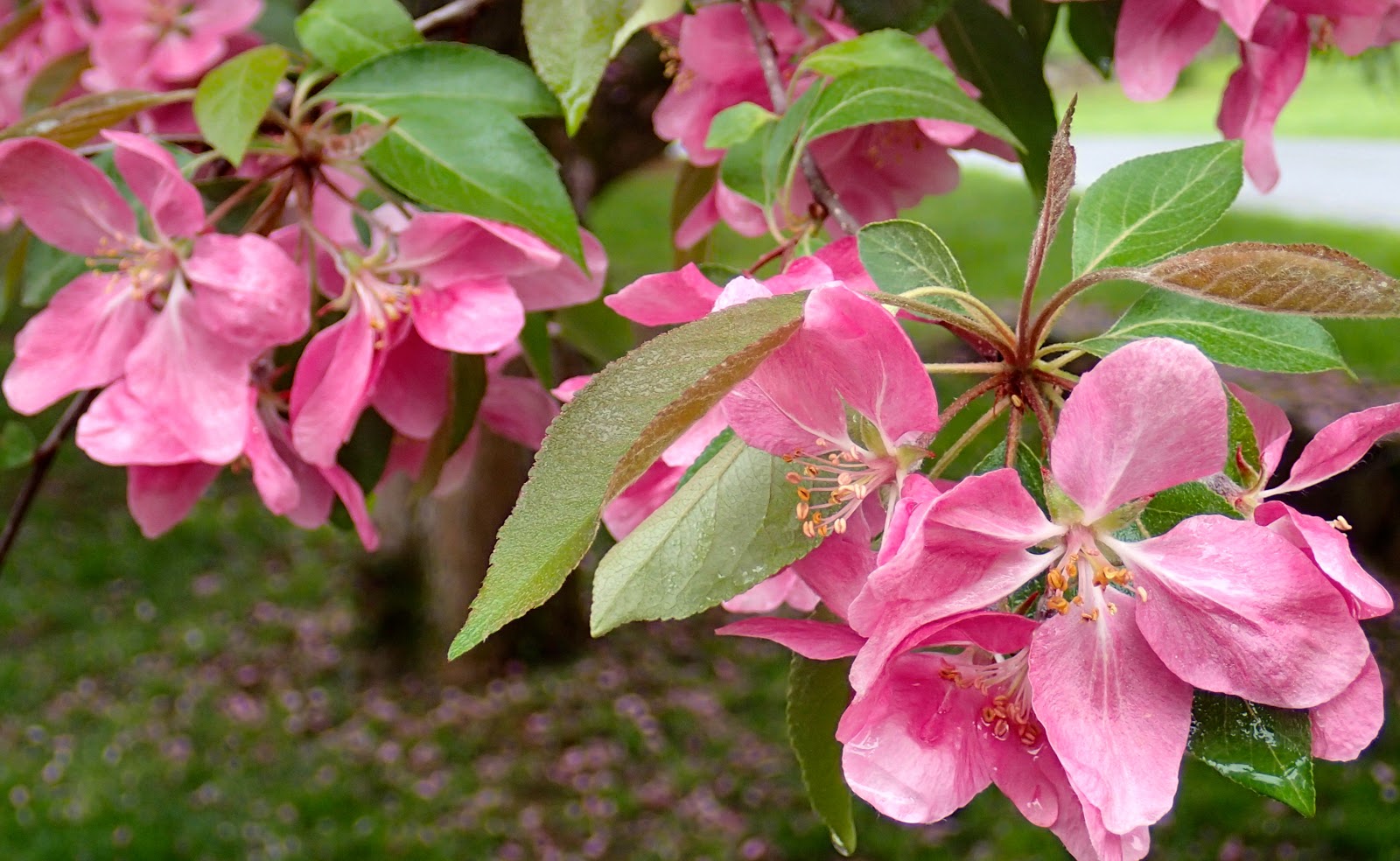
Fruit trees, white and pink
Every day John reads to Lib a biography of 
Winston Churchill.  She, member of the greatest generation, listens raptly to the retelling of the seminal events of war which shaped her life. I note, her singular humor and firmness of will do not seem dissimilar to the grand old leader himself.    

It's hard to grow Japanese maples on the west coast - but here they are a burgundy counterpoint of color to the lavish pastel trees dancing with complete abandon on the lawns.


Lilacs - what I do remember from the midwest.  John and I seek them out, even in California, we found a place they will grow.   This year, he bought them for Lib in a florist's shop. Odd, old-fashioned, reminding me of a beloved aunt's perfume, The most lambently Proustian of blooms.  This bush grows on his junior-high crush's home. The fragrance, perhaps the most stunning sense memory of all, the memory of purest childhood.


This is SpringHill Cemetery, 1765, on Valley Road, one of several old cemeteries to be found along the rapidly greening roads of New Canaan. So pleasant and peaceful, thinking of all the families and their lives lived ill and well, marked with the private events of individual history. 

Dogwood belongs here most of all.


Saturday, May 4, 2013

GARDEN ROSES: Continue to Thrill

Oklahoma, Mr. Lincoln, Chrysler Imperial, and Firefighter - you should smell the room.
The work of roses has special rewards, especially in California where the mild sunny climate makes for a long bloom season. I enjoy seeing them respond to my almost daily ministrations.  How they fascinate with their fragrance, color, and form!  
Carol Burnett

I think this is Gina Lollabrigida.

Molyneux - a new rose for me, it's a David Austin.  


Munstead Wood, another David Austin

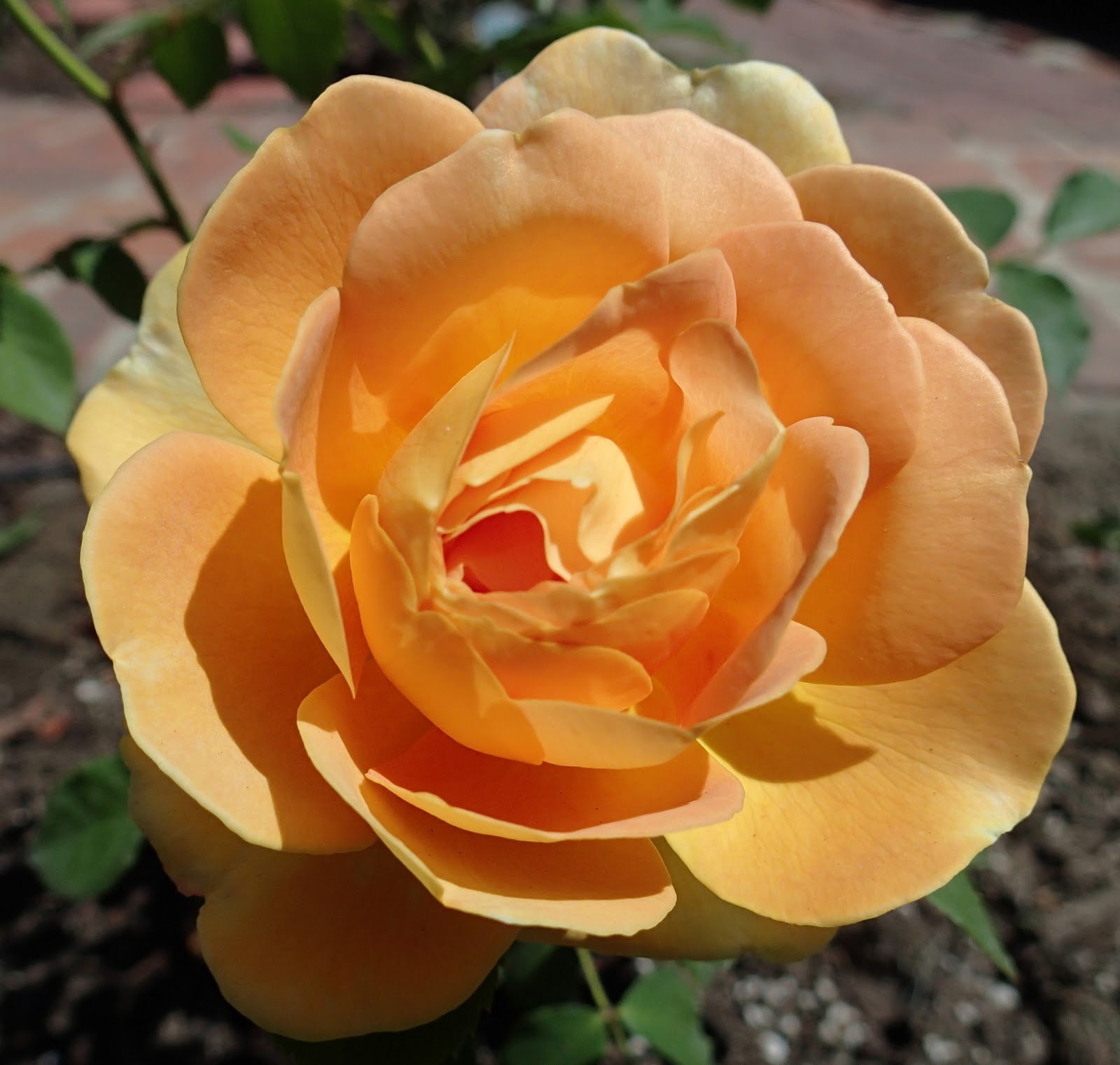
Gina Lollabrigida, fully open and mature, the color lightens to soft yellow.

Mellow Yellow - what a cheerful presence!


Mr. Lincoln

Over The Moon

William Shakespeare 2000


Royal Amethyst - another fragrant hybrid tea
Remember Me - a hybrid tea blend, the color changes as it opens
Heirloom - the most productive rose in the garden - why, I can't say, but it's very large.
Sugar Moon - a promising white rose.  It has not yet "balled" and I'm able to control thrips and aphids, both of which ruin whites.  Let's see how productive it is. The form is not as beautiful as Crystalline, but it's quite good.

Enchanted Evening, a fragrant floribunda

Tiffany
Over The Moon