Saturday, September 11, 2010

PHOTO ESSAY: 9-11 Memorial at LAX

One sunset evening I waited to pick up my husband - his late plane gave me time to visit the Theme Restaurant at LAX and the 9-11 Memorial made there below and in front of it.  It's a somber entrance for a dining room, but an airport, with it's leavings and arrivals, certainly is a fitting place for the souls who departure was caused by a tragedy of air travel's possibility.


Monday, August 23, 2010

ESSAY: Gulf Oil Spill: A New Louisiana Story

Once upon a time there was a kingdom by the sea.  It was shaped like a humble workboot, but it was a frontier of singular wild magnitude, and its greatest treasure was the final destination of a mighty river. The meeting of river and sea created a vast, spongy delta swamp of bayous, inlets, sky, and slow tidal penetrations.
The value of the great kingdom was not understood by its king, and desperate for money after fighting many wars, he sold the land to the young leader who lived in a new kingdom nearby.  He, in turn, was laughed at for paying so dearly for unexplored swamps, but as time passed,  he was praised for his wisdom and foresight.


Some two hundred years passed quickly and the small nation grew to possess wealth and power never before seen in human history.  The country, once so impenetrable, developed farms, factories, fishing fleets, and great cities, but the bayou remained a place of surpassing beauty.

David Bates, Catfish Moon, oil on canvas, 84x64” www.dallasmuseumofart.org/


A nation is often symbolized by body parts: the capital is its vital acting mind, the farm states its heartland, its wild frontiers its elusive soul. But lovely Louisiana claimed, by right, the womanly center, tender and receptive, fecund, reflective, responsive, vulnerable.
Flaherty tells their story about how oil is taken from the land using the watching eyes of a bayou youth.  Ulysses is a prince of Petit Anse Bayou who roams the waters, at one with his world and time.  His father allows the Oil Lord’s workers to drill on his land, hoping to earn some extra money for his family.
Corner of Uncle Sam Plantation House and Garconniere, St. James Parish, Louisiana, Walker Evans Archive, Metropolitan Museum of Art, www.met.org/
Louisiana’s citizens sang and told many stories: about its great city, New Orleans, the sugar cane plantations, the Acadian people who came from the cold North, about their special music, jazz; their fervent religious devotion, and their mad once-yearly celebration they called “Mardi Gras”.
  The houses were humble bayou shacks or gracious welcoming plantations, lacy charmers with wide front porches.  Life was slower; it was humid, hot, prone to mildew and decay, flood, damp, but languid and dreaming always.
 Quote from interview with Mrs. Flaherty included in DVD, from the solicitation made by Standard Oil to famous documentary filmmaker Robert J. Flaherty in 1946: “...a permanent artistic record of the contribution which the oil industry has made to civilization, ...that would present the story with dignity and the epic sweep it deserves...and ensure...a lasting place in the literature of the screen”.
Not only did Louisiana tell stories about itself; others came to set their own tales upon the changing world of the bayou and lakes. The storytellers of the kingdom told them in a new way, showing pictures that moved and talked for them instead of in the old manner, circled around a fire and speaking of the past so the young would possess their heritage.  
Storyteller Flaherty was sent to Louisiana by a powerful group of lords to make a story for the people of the kingdom. Their story was about oil, a fuel that gave the land even more wealth. It had just been found along the shores, and the growing country needed its power.
 The huge machine used to drill the well fascinates the boy, who climbs it, fishes from it, and is befriended by the workers. The workers are heroes to Prince Ulysses, who admires their power. Prince Ulysses is skilled too, catching and skinning the alligator he thinks ate his pet raccoon, showing it proudly to his friends. He watches excitedly as long sheaths for a drill are screwed together and penetrate deep into the bayou waters to reach the oil secreted beneath. But when it does, the well explodes with a tremendous roar. 

Finally the well stops spurting, and begins pumping oil instead, and the drilling barge is towed away.  Only the small machine called a “Christmas Tree” turns the pumps of the well in the still waters. With the money he earns, his father buys gifts for his delighted family:  for his wife, a new cookpot and a dress, and for Ulysses, a fine hunting rifle.  Bayou life is like it always was, tranquil, placid, and serene, a place apart, a place to return in dreams

 frame from “Louisiana Story”, showing a “newspaper account” of the blowout - photos from DVD on computer screen


.
But the story Flaherty told for the oil lords left out some of the things that happens when a well blows out.
The oil spreads all over, through, and beneath the earth and sea, sticking to everything it touches. The air is filled with sickening gases that can ignite into flame.  The animals and plants are covered with oil.


Then the citizens of the kingdom have to work hard to clean the oil from their forests, fields, lakes, bayou and sea.
The people liked Flaherty’s story, and valued it because it showed their beautiful land, but as they watched, they realized it was the story the Oil Lords wanted told. It was not a story that helped them keep their kingdom safe for themselves and their children, nor a story to help them take care of the bounty of their kingdom. Instead, they were reminded of great tragedies that had befallen the lovely Louisiana since that time, and they were saddened afresh. 
The kingdom is a very different place today than when the emperor sold the vast land holding.  People talk among themselves, wondering if the kings and lords had become like he was, unable to understand the value of the land they hold, and willing to sell its future short.
Tonight in the bayou, the egret flies in a sky reddened with gas and dust. The pirogue glides over waters calm but rusty glittering with slick.  The moon casts her white blessing, a pathway to what could be again, if the citizens only choose.

Thursday, August 19, 2010

DANCE REVIEW: Luminario Ballet: Happy Landings


It was cool, now, hip; I think deliberately so, and even with that intention visible, remained thus. The choreography's elements are forms from the gasping split-second dazzle of gymnastics performance, the whipping arcing reversals of ice-skating, (bad shoes) the dazzle and cool mystery of Cirque de Soleil, and the unique elegance of en pointe partnering from classical ballet (good shoes). A deeply interesting unity: I thought of the first time I saw La-La-La Human Steps and Pilobolus. (I should see more of Cirque du Soleil).

The dancers are all exquisite bodies, slipping into minimal costumes that silkily enhance and reveal the buoyant, shining life energy within them. Narrative structures and traditional gender partnering that reminded me of Twyla Tharp's "Sinatra Suite", told stories of flirtation, love-seeking, loss, rejection, heartache, and reunion, heating up the stage. It stayed that way most of the night, too; seeking, beautiful eroticism.

Aerial dances were performed on two high apparatus with suspended ropes, placed well back on the stage, imposing the necessity of frontality on the choreography, an interesting challenge, but which distanced the audience somewhat. It's time to hold your breath - will the dancers fall like performers in Olympic competition? Course not.

I calmed myself by deciding that the choreographer wouldn't stage risky business; it just looked that way: breath-taking swoops, ascents, split-second releases, the dancers folded in streaming scarves unfurling and cascading down the ropes. It was elegant, lyric, tension-filled - how would the dances end? Would they come down? Ascend to Heaven? Solo dancers began to climb, were joined by others, in an elevated complex variety of exchanged levels, extensions, and excitement, momentum sustained throughout the aerial work with its necessity of upward and downward mobility.

The program included a Bella Lewitzky dance called "Turf". I found this choice really a fascinating contrast to the other pieces. It had such heart, such warmth. It explored the possibilities of ascent without bootstraps, only dancers' bodies.

They struggled to control the stage's square footage, the air around them, and each other's spaces, too. The dance concluded with a pyramid of bodies, yearning upwards, an energy-built monument that earned and possessed the place.

It was fashioned after the Los Angeles riots of 1991, and Luminario Ballet is the only company that has ever performed it besides Lewitzky's.

The audience was receptive, supportive, and so am I, looking forward to seeing more from this engaging, experimental company. (www.luminarioballet.org)

Saturday, August 14, 2010

POEM: As Time Goes Buy

Soft Sculpture by Orly Cogan, viewed and photographed at Charlie James Gallery, Chinatown Los Angeles

Finished school, experience-rich
Thought I’d found a singular niche

Out there swimming in a great big pool
Great Big Power changed all the rules.

Get this: the fundamentals no longer apply
Upon past advice I can longer rely.

Finances controlled by freaky hi-tech
Plans and dreams now all a huge wreck.

Design some new models, account for the variables
Predictions all dire, consequences terrible.

Apocalypse scenarios breed and astound
No ostrich position will help to surround

Me with some comfort and a viable plan
Hunker down, take it, just like a man.

All the targets move out of range
Take a pill quick, it’s nauseating change.

Dismantle the pension system entire
Cut back Soc Security so folks can’t retire.

Raise the co pays on medical insurance
Be sure that from me you’ll find little concurrence.

Call for accountability, cut back school funds,
Surely those budgets are visibly rotund.

Only tomorrow’s citizens will suffer,
Don’t matter to you, you rich fat old duffer.

Shut down the parks, libraries, and squares
Don’t fund the infrastructure, just let it wear

Out and slip down a bottomless black hole
Middle class too, signing up for the dole.

Take care to mend nets before it’s too late
Correct course for our shortsighted mothership of state.


Wednesday, July 21, 2010

ESSAY: Levi's New Ad Campaign


Screen shot from Levi's ad, "Go Forth", featuring Walt Whitman in scratchy authentic sounding old 78 vinyl voiceover - unbelievable, really. It's meant to be powerful, poetic, a ode to the endurance and dignity of mankind. Fireworks go off, sounding like gunshots. It's a gritty place of trial and try-again, this America. Then, the ad slaps a close-up of the little red Levi's tab onto the last frame. Is that a subtle butt shot? Well, that's where that little tab is, n'est-ce-pas?

When I found out it was shot mostly in Louisiana, I thought of Robert J. Flaherty (Nanook of the North) - didn't they make you see that in film class - whose last documentary was a commission from Standard Oil (1948), called Louisiana Story. It's the story of the construction of an oil rig amidst a pristine wetlands, and how well it all turned out. It did, didn't it? Didn't it?

"The genius of the United States is not best or most in its executives or legislatures, nor in its ambassadors or authors or colleges, or churches, or parlors, nor even in its newspapers or inventors, but always most in the common people."

I want to praise activists through the years.
I praise those of the past as well, to have them honored.
Studs Terkel, author of Working
Studs, are you turning over in your grave yet? Just keep reading.


Next Ad "We are all workers":

[wind blows soft and sad as soft slow-spoken African-American young girl reads her school essay in voiceover]

"We were taught how the pioneers went into the West.
They...made up what things could be...
People got sad and left.
Maybe the world breaks on purpose...so we can have work to do.
...people can't see...how frontiers are all around us." [ glorious orchestral music up]

from To Work, directed by John Hillcoat, shot in
Braddock, PA


Screen shot from We Are All Workers, directed by
Aaron Rose, a five-minute mini-documentary about the attempt
of Braddock PA, a decaying milltown, to rebuild as a commercial center
and artists' community. It's a story of urban reclamation, going green,
and Levi's Jeans. Weiden & Kennedy, a Portland ad agency (Nike, Old Spice,
Target, Converse) did these incredibly artsy beautiful ads.

Well, you've got to have something to wear while you're saving the earth. Gosh, it's nice to hear someone talkin' credit about what we're tryin' to do. Maybe it's not so bad to have to work hard.

It still takes bodysweatmuscle work, work with your hands and back, to keep things clean, to get fixin' up done, doesn't it. Kinda makes you think how you oughta help out, join in. They were like that in the '60's. They had new explanations, new motions and notions. You see them around today, in post offices, Apple stores, with their backpacks, faded blue denim workshirts,
hiking boots, folk dance skirts swirling. Back East, lots of them, still. I think they got them in
Idaho and Oklahoma, too. Don't they?


What they've got is people who wear jeans but really don't want to be had. Do you really think that rugged individualists are going to buy jeans because a corporation has branded itself as socially responsibile? Has endowed itself with certain American rights? Where are these jeans made, anyway? Did Levi's open a factory in Braddock?


I was going to get a plane and go wash birds in Louisiana. Then my biologist brother told me that it's really hard on them to be washed with detergent and most of them die, unable to function in the new locations they are released to.


So I just cleaned the garage instead. I hired two Levi-clad day laborers from the city's hiring site who worked very hard in 95 degree temperatures for $12 a hour, a burrito lunch, and all the water they could drink. See, I got the idea, right? Then I had a garage sale and people paid me to carry away my junk.


I think I'll just let everyone else reclaim, resist, and buy the jeans instead and hang out looking retro-cool.

If hard work were really a virtue, then mules would be saints.
James Dee Richardson

Maybe they really are, and we just don't know it.

Seriously, the commercials are exquisite in tone, frame by frame marvels of polished balance, and have a most lyric and elegiac mood, deeply cinematic. I love the color, the scratchy chalky typeface, the music. Reverentially, I return to Walker Evans, the WPA murals, Dorothea Lange, Bernd and Hilla Becher, The Grapes of Wrath...You just want them to go on and on...video photo essays of deep and satisfying summation.

Are these ads going to sell jeans? I do want to see the nursing home of the baby boomers in a few years, check out what they're wearing while they listen to the Stones. Hope they can still hear them.

LAST AD: Verizon


An unshaven, balding young man turns his chiseled profile to the heavens. His head is circled by halos, blue, undulating to reddish near his shirt. His shirt and tie are open, his chest is swelled with grace. He is trusting, open; a seeker who has listened and looked for answers, and is being filled with them as we gaze.

Yes, the heavens are filled with messages these days, just like they've always been. There's scholarly agreement about just what St. Teresa found out in her moments of rapture. I wonder about our St. John of the Electronic Desert, though. What twittering shades have informed his vision?

Signal is strength - just what does that mean? Is that like the medium is the message? That means that content is irrelevant, doesn't it? Or maybe, it's like E.M. Forster, "only connect". That will be enough to keep the airwaves open.

The ad is proto/neo-Shepard Fairey, of recent Obama-vision notoriety. What makes me connect the two advertisements? There's a kind of fascist agit-prop message underlying this style, and also in the Levi's ads, I think. It serves as a kind of advertiser's warning and confession: Don't be fooled; this really is an ad after all, and I really am trying to sell you something. They just do it so very very well.

Thursday, July 15, 2010

ART REVIEW & ESSAY: Textiles: The Value of the Decorative Essay&Photos


author photo
Textiles have a powerful continuing fascination for me - as an object class, they serve the most daily, intimate, bodily and domestic needs, but cultures almost immediately begin to embellish them with images that retain undeniable authenticity. It's impossible to escape communicating status, aesthetic values, and personal identity when donning a garment of any kind. They function as brand, prison, transparency, and mirror. To wrap the body is the first, continuing, and last act of human life, the most poignant care the family and society performs for each other.

Since textiles are impossible to redact, their power has relegated them to a separate class of art object - domesticana - as the Chicano art movement terms art products made by women with traditional female-gendered material and messages.

Dean MacCannell in The Tourist, describes tourism as a compensatory perceptual stance and relational form, an attempt at "moral involvement" (p. 40) because "everyday people...[are]...condemned to look elsewhere, everywhere, for...authenticity, to catch...a...glimpse of it reflected in the simplicity, poverty, chastity, or purity of others' "[cultures] (p.41). Global capitalism and materialism has destroyed human unity with the natural world and only simulated realities are available.

 "I hate traveling and explorers". Claude Levi-Strauss, Tristes Tropiques, quoted in Artforum, April, 2010, p. 174

I would go further, suggest that the collector/aesthetician-stance may serve a similar purpose. MacCannell, whose critique, chilling and undeniable as it is, seems to me to leave us in an all too familiar unidimensional wasteland. Might as well become a freegan. Then I look at Claude Levi-Strauss describing a transformational energy in culture that reverses negative meanings, rendering them positive. An example is cannibalism. Christianity has created a symbolic sacrament of the body and blood that functions to incorporate power from the god, as cannibals believed they could when they consumed their enemies. (Thomas Crow, Artforum, April, 2010, p. 171).

Psychologists like Erick Erickson also describe behaviors that while neurotic in some, may be mature ego function in others. (Childhood and Society). Always, dependent upon the context. So, I aim for a post-modern informed, contextual integration. It is the task of individual to create a purposeful stance, which though subjective, will be convincing.

I realize that I want an aesthetic that is both journey to enjoyment and transcendence. It must not deny irrationality, hypocrisy, and grief. No scolding or preaching either. Don't bleach me dry traveling to distant conceptual plateaus. Tricky navigation is challenging and welcome. Oh, and please, an occasional humorous side trip. The experience of life on this wasted industrial plain still is our life to live. Reductionism is a reverse disposal of perspective, cramping open-ended possibility and creative action.

Then, to return to my interest in textiles and tourism. These are my mother's old handkerchiefs. Born in 1910, surely she used them for decades until kleenex convenience replaced them. I found them in an unironed, but clean, wadded-up ball when I went through her possessions. I kept them for a long time, until, unable to bear it no longer, one summer day with little to do I carefully ironed and folded them all, and put them away in a special box. At least I still had room for them.Then I saw photos of Rachel Whiteread's studio, a few objects on display. How wondrous strange - that this minimalist sculptor of newly-filled volumes that moved me to mourn and face death would display objects, no matter their formal properties.

author photo  
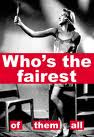
Barbara Kruger

Martha Stewart's Living Magazine articles on collectible textiles (June, July 2010) showed me I could display the handkerchiefs, but it wasn't until writing this today that I find this choice purposeful, battling myself as I do over sentimentality and kitsch. I do not claim art status for them, but to use them to trace the domesticana chain from function to craft to modern textile/fiber art.


 Barbara Kruger - all small photo /text images
Orly Cogan, textile images
Searching for My Prince